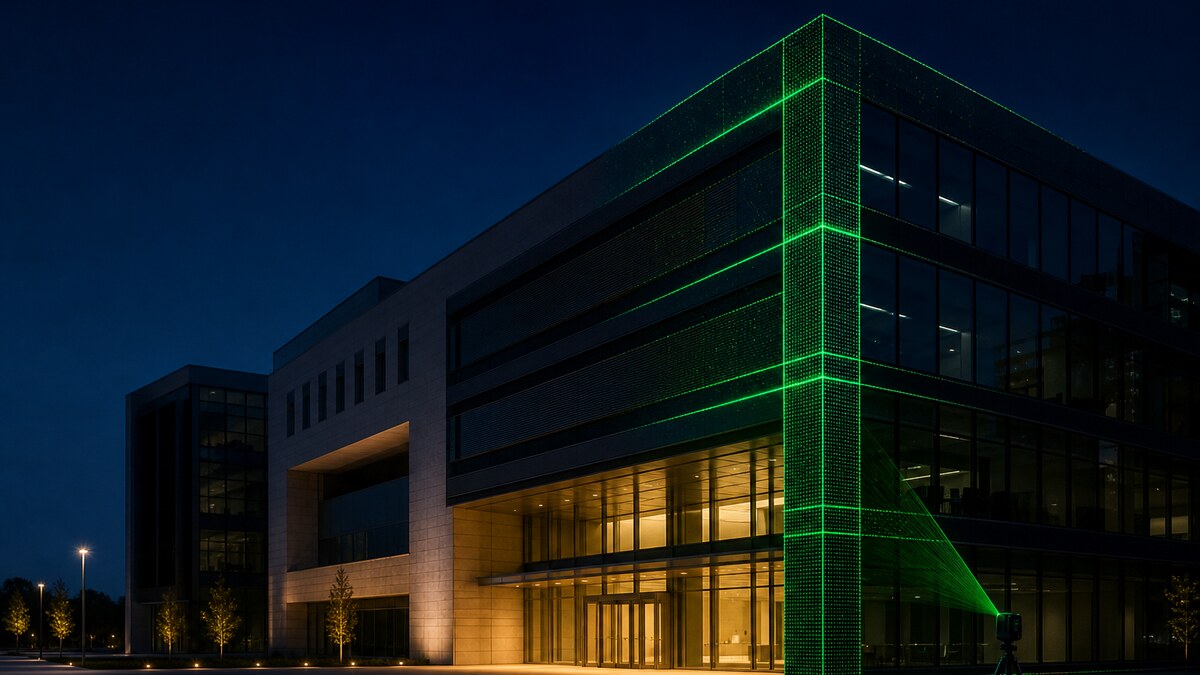
Construction scanning on night shifts is not a niche gimmick—it’s how a lot of occupied buildings get accurate as-built data without closing floors during business hours. Healthcare corridors, retail centers, and active offices are common examples where daytime access is limited but design and coordination still need a reliable model.
Why teams schedule night or off-hours scans
- Patient care and safety — Hospitals and clinics cannot block critical paths during peak hours.
- Revenue floors stay open — Retail and hospitality need scanning windows that don’t disrupt customers.
- Security and escorts — After hours, access routes and badging are often simpler to control.
- Less foot traffic — Cleaner scan data when people and carts are not moving through the line of sight.
Black Forge provides 3D laser scanning for buildings nationwide, including coordinated night and early-morning mobilizations when the building team defines the window.
What to plan before the scan window
- Written access map — Which floors, wings, shafts, and roofs are in scope; elevator availability; where the scanner can set up.
- Single point of contact — Facilities, security, and the GC should know who approves movement between areas.
- Live systems — Note HVAC zones, alarmed doors, and sterile or restricted areas that need extra clearance.
- Deliverable clarity — Point cloud only, Scan-to-BIM, or verification against an existing model—scope drives crew size and schedule.
- Contingency — One weather or security delay should not collapse the whole renovation schedule; build a backup night if possible.
Night scanning is not “less accurate”
Accuracy comes from control, registration, and scanner setup—not from time of day. Low light is generally fine for LiDAR; color imagery may need consistent supplemental lighting if your deliverable depends on it. QA still includes check shots and alignment to project control.
From scan to coordination
Night capture is often the first step in a Scan-to-BIM or renovation workflow: capture while the building sleeps, model during the day, coordinate in the BIM with the design team. If you only need verification (e.g., slab or embed checks), you may not need full modeling—scope that early to save cost.
Regional example: concrete flatness in the Southwest
For slab FF/FL verification (different deliverable, same precision mindset), see our Phoenix and Southwest concrete pour flatness scanning work—another case where field timing and access drive how we mobilize.
Related content
- What is 3D laser scanning in construction?
- 3D scanning services
- How 3D laser scanning improves construction accuracy
Black Forge Technology can help — Plan night or off-hours laser scanning on your occupied site. Book a free assessment or contact us with your access window and scope for a proposal.